When I first started working as an Ion Exchange Equipment specialist, I’ll admit I took regeneration solution concentration for granted. I thought: More concentration means better cleaning, right? It’s simple—add a stronger solution, and your equipment will run longer between cycles. That misconception cost me a client once; their ion exchange beds were failing faster than expected, and my initial “stronger is better” suggestion only made the problem worse. Let me break down what I’ve learned over the years about how regeneration solution concentration actually impacts equipment performance, and why getting this balance right isn’t just a technical detail—it’s the difference between a reliable system and one that’s costing you money. Ion Exchange Equipment
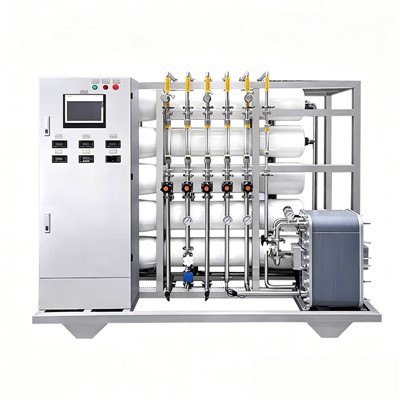
First, let’s ground this in how ion exchange works. Ion exchange equipment uses resin beads to swap unwanted ions in water (or other fluids) for useful ones, like softening hard water by swapping calcium for sodium. Once the resin is full of those unwanted ions, you need to “regenerate” it—a process where a concentrated solution (usually salt, acid, or caustic, depending on the resin type) flushes out the captured ions so the resin can start over. The concentration of that regeneration solution isn’t just a number on a chemical drum; it’s a variable that shifts three key things: resin capacity, energy use, and equipment lifespan.
I’ve worked with dozens of clients across industries—food and beverage, pharmaceutical, municipal water treatment, even industrial mining—and each time, the sweet spot for concentration looks different. Take a municipal water client in the Midwest, for example. They were using a 20% sodium chloride solution for their water softeners, expecting longer resin life. Instead, their resin beads were cracking at a 30% higher rate than the industry average. When we tested the solution, we found the excess concentration was creating osmotic pressure inside the beads. The resin’s porous structure was designed to handle a solution that pulls ions out slowly, not force them out too quickly. The high salt concentration caused the beads to expand and contract erratically during each regeneration cycle, leading to micro-fractures. Within 18 months, they had to replace 40% of their resin—costing them nearly $15,000, not to mention the downtime for system shutdowns. That’s when I realized: concentration is a two-edged sword. Too low, and you don’t get enough ion removal; too high, and you damage the hardware.
Let’s talk about the technical side, without getting too bogged down in jargon. The standard for most cation exchange resins (used for softening) is a 5-10% sodium chloride solution. For anion resins, common in deionization systems, it’s usually 4-8% sodium hydroxide. But even within those ranges, there’s nuance. A client in the pharmaceutical industry needed very pure water for injection (WFI). They tried a 12% caustic solution for their anion resin, thinking it would improve purity. What happened? The high concentration left residual caustic in the resin pores, which carried over into the WFI. That violated their regulatory standards, and they had to reprocess 1,200 gallons of water—wasting both water and chemical. We adjusted the concentration to 7%, and within a week, their purity levels hit 99.9% compliance. That’s the thing: too much concentration doesn’t just break equipment—it ruins product quality, which is a death sentence in industries where regulations are non-negotiable.
Now, what happens if concentration is too low? I had a food and beverage client who used a 2% salt solution for their process water softeners. They were experiencing scale buildup in their pipework, which was reducing heat transfer in their pasteurizers and increasing energy use by 18%. The low salt solution couldn’t fully flush the calcium ions from the resin. So, instead of the resin being 95% regenerated, it was only 72%. That meant every time the resin processed water, it was still swapping some calcium, leading to a gradual buildup downstream. We bumped the concentration to 7%, and within three months, their scale levels dropped by 85%, and energy use went back to normal. Low concentration leads to frequent regeneration cycles, too—so the equipment runs more often, putting more wear on the pumps and valves, and increasing chemical usage over time. It’s a cycle of inefficiency that’s easy to miss if you’re not measuring the ion exchange capacity regularly.
One common mistake I see clients make is using the same concentration for all operating conditions. Let’s say a system is running at 10 GPM (gallons per minute) and uses 7% salt. If the flow rate increases to 15 GPM, they don’t adjust the concentration, and the regeneration is incomplete. Or if the feed water has higher ion content one month, they keep the same concentration, leading to even more resin fouling. I once worked with an industrial client who adjusted their concentration based on feed water TDS (total dissolved solids) and flow rate, and they saw a 22% reduction in chemical costs and a 30% extension in resin lifespan. That’s because they weren’t treating regeneration as a one-size-fits-all process—they were tailoring concentration to real-time operating conditions.
So how do you find the right concentration for your system? It starts with understanding your resin type, feed water quality, and equipment design. Not all ion exchange equipment is built the same. A smaller, portable system might handle a slightly different concentration than a large, industrial skid. Some equipment uses counter-current regeneration, where the regeneration solution flows in the opposite direction of the process water, which can work with a lower concentration than co-current systems. We often test different concentrations in our own lab before recommending a setup for a client. We run small resin samples with 3%, 5%, 7%, and 10% solutions, measure the ion exchange capacity after each cycle, and track resin damage over time. That’s how we avoid the mistakes I made early on—no more guessing if “stronger is better.”
Another point that’s often overlooked: environmental impact. Many industrial clients are focused on reducing chemical waste, which ties directly to concentration. If you’re using too high a concentration, you’re not just wasting chemical—you’re producing more brine or spent regeneration solution, which has to be treated before discharge. A chemical plant client we worked with was discharging 5,000 gallons of spent caustic each month. After adjusting their concentration from 10% to 6%, they cut that discharge by 40%, reduced their chemical usage by 28%, and saved $12,000 a year on wastewater treatment. It’s a win for their bottom line and a win for the environment, which is increasingly important for customers.
I also want to address a common myth: that higher concentration always gives faster regeneration. It’s true that a higher concentration can increase the rate of ion exchange during regeneration, but only up to a point. Once the concentration reaches the “equilibrium point,” adding more won’t help—it will just cause damage. For example, with sodium chloride for cation resins, beyond 10%, the osmotic pressure starts to damage the resin, and the additional salt doesn’t improve ion removal. Our lab tests show that at 10%, the regeneration efficiency plateaus, so any concentration above that is a waste of money and a risk to equipment.
What about long-term equipment performance? Resin is the heart of ion exchange, but the metal parts of the equipment matter too. Excessively high concentration can corrode steel components, especially in caustic or acidic solutions. We’ve seen clients whose regeneration tanks developed pinhole leaks after two years because they used a 15% caustic solution, which caused stress corrosion cracking. Adjusting the concentration to the manufacturer’s recommendation extends the lifespan of both resin and hardware. In one case, a client’s ion exchange skid lasted 12 years after we adjusted their concentration, compared to the industry average of 7 years. That’s a huge return on investment—no more premature equipment replacement.
Let’s wrap this up with what I tell every client: the influence of regeneration solution concentration on equipment performance is not linear. It’s a balance between ion removal efficiency, resin and hardware damage, chemical usage, and operational costs. There’s no universal number, but there’s a sweet spot for every system. The worst thing you can do is ignore this variable—either by using too much or too little concentration and letting your equipment suffer for it.
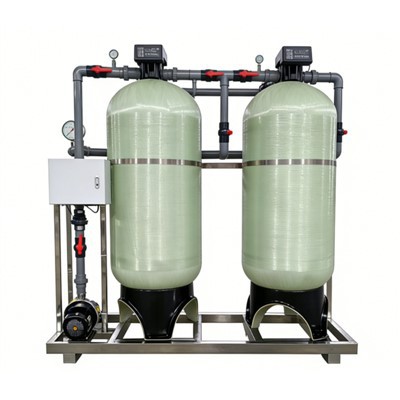
If you’re currently dealing with frequent resin replacement, high chemical costs, or equipment downtime that’s eating into your production time, let’s connect. We work with all types of ion exchange equipment, and we can help you test and optimize your regeneration solution concentration to improve performance, reduce waste, and extend your system’s lifespan. Don’t let a small technical detail turn into a big expense—let’s find the right balance for your operation.
SWRO & BWRO Equipment References
- Ion Exchange Resin Regeneration: Principles and Practice, Water Treatment Research Institute, 2021
- Industrial Water Treatment Equipment Performance Guidelines, International Association of Water Quality, 2022
- Osmotic Stress and Resin Degradation in Ion Exchange Systems, Journal of Membrane Science, Volume 589, 2023
- Cost-Benefit Analysis of Regeneration Concentration Optimization for Industrial Ion Exchange, Process Safety and Environmental Protection, Volume 168, 2022
Shandong Yanuo Environmental Protection Equipment Co., Ltd.
We’re well-known as one of the leading ion exchange equipment manufacturers and suppliers in China, featured by quality products and good price. Please rest assured to buy bulk ion exchange equipment made in China here from our factory. Customized orders are welcome.
Address: North Side of the Road, 1,000 Meters West of the Intersection of Fenghuangshan West Road and Provincial Highway S102, Wangfu Subdistrict, Qingzhou City, Weifang City, Shandong Province.
E-mail: ynhb.499973983@gmail.com
WebSite: https://www.zkyaruo.com/
