Hey everyone, if you’ve ever worked on high-voltage projects—whether it’s for industrial power supplies, medical devices, radar systems, or even electric vehicle charging—you know picking the right component can make or break your design. As someone who’s been in the HVP high voltage diode game for over 12 years (yep, I started this gig right out of tech school, no fancy MBA here), I get so many questions: how do HVP diodes stack up against other high-voltage parts people usually reach for? I’m gonna break this down like I chat with my regular clients over coffee—no jargon overload, just real talk. HVP High Voltage Diode

First, let’s get on the same page. When we say “high voltage” here, we’re talking anything over 1,000V, right? Not your phone’s 5V charger. Stuff where even a tiny misstep can zap your whole setup, or worse, cause safety issues. The main other high-voltage components people compare us to are: high-voltage transistors, silicon controlled rectifiers (SCRs), and gas discharge tubes (GDTs). Let’s go one by one, no corporate fluff.
Let’s start with the basics of what an HVP high voltage diode does. Diodes, in general, are one-way streets for electricity—current only flows from anode to cathode, not the other way. HVP diodes are just the beefed-up version built to handle thousands of volts, no breaking a sweat. Most of my clients use them for rectification (turning AC to DC in high-voltage power supplies), voltage multiplication (like in X-ray machines), and isolation (keeping sensitive low-voltage parts safe from big power spikes).
Now, compare that to high-voltage transistors. Transistors are switches, right? They can turn current on and off, not just block or let it flow. So when would you pick a transistor over an HVP diode? If you need variable power—like in a motor controller, where you’re ramping up speed. But here’s the catch: high-voltage transistors are finicky. They need constant gate drive power to work, they generate way more heat than HVP diodes, and at really high voltages (say, 10kV+), their efficiency drops hard. I’ve had a client who switched from transistors to our HVP diodes for their X-ray generator a couple years back—they cut their cooling system size by 40% because diodes run cooler, no extra power for gate drives. That’s the kind of win I live for. But wait, transistors do have a place—don’t write ’em off. If you need dynamic control, they’re better. But for static, one-way flow? HVP diodes hit different.
Next up, SCRs. SCRs are like diodes that can turn on with a little trigger signal, but once they’re on, they stay on until the current drops way below the threshold. So they’re good for high-power AC switching, like in industrial welding machines. But here’s where HVP diodes pull ahead: speed. SCRs are slow—they can take microseconds to turn on, which is a big problem for high-frequency applications. If you’re building a 10kHz power supply, SCRs will cause lag, waste energy, and overheat. Our HVP diodes, though? They’re fast—some of our high-speed ones switch in nanoseconds. That’s a game-changer for radar systems, where every millisecond counts. Also, SCRs can have “latching issues”—once they trigger, they won’t turn off unless you manually cut the current. HVP diodes never do that; they just sit there blocking until you flip the AC, no extra work. Yeah, SCRs are cheaper for super high-power, low-frequency setups, but for most of the projects I see, diodes are more reliable and efficient.
Then there’s gas discharge tubes (GDTs). Those are the little tubes with gas inside that break down when voltage gets too high, acting like a circuit breaker. People use ’em for surge protection. But GDTs have two big downsides compared to HVP diodes. First, response time: GDTs take milliseconds to trigger—way too slow for protecting sensitive electronics from fast power spikes. If a lightning surge hits your system, a GDT won’t react fast enough, and your expensive PCB gets fried. HVP diodes react in nanoseconds, so they clamp the spike before it can do damage. Second, GDTs are one-and-done usually—once they trigger, the gas breaks down, and they need replacing. HVP diodes? They’re solid-state, no moving parts, so they last for years, even in heavy use. Sure, GDTs are cheap for occasional, low-stakes surge protection, but if you’re building something that runs 24/7, you don’t want a component that dies after a few spikes. That’s a mistake clients make all the time—they go for GDTs to save a buck, then have to replace them every 6 months. I’ve had so many repeat customers come back after that, switching to our HVP diodes.
Wait, but let’s talk about when HVP diodes might not be the best pick. No sales pitch here—just realness. If you need bidirectional control, diodes are out because they only go one way. Transistors or SCRs can handle that. If you need surge protection for a very low-frequency, high-power AC line where cost is king, GDTs or SCRs might be cheaper. But 9 times out of 10, when a client is coming to me asking about high-voltage components for their core circuit, diodes are the sweet spot.
Let me throw in a specific example to make this concrete. Last year, a medical device startup reached out to me. They were building a portable blood analyzer that used a small X-ray sensor. Their original design used high-voltage transistors, but the thing was too big—they couldn’t fit it into a handheld device. They were also looking at SCRs, but the lag time made the X-ray readings inconsistent. We supplied them with our compact, high-efficiency HVP diodes. We shrank their power supply size by 55%, cut power consumption by 30%, and the readings are now 99.8% consistent (they showed me the data, I wasn’t just making that up). They’ve ordered 12,000 units since then—word travels fast in the medical device world.
Another thing people don’t talk about enough: reliability. HVP diodes are solid-state, so no parts to wear out, no moving components that can jam. Transistors have gate oxide layers that can degrade over time, especially at high voltages. SCRs have latching contacts that can wear out. GDTs have the gas that can leak out. I’ve tested our diodes under extreme conditions—temperature swings from -40°C to 125°C, constant voltage cycling for 10,000 hours—and they still perform like new. That’s huge for industries like aerospace, where a component failure is not just an inconvenience, it’s a safety hazard.
Wait, let’s clarify some myths. A lot of folks think HVP diodes are only for rectification. Nope—we have specialty diodes for voltage clamping, high-frequency switching, even laser drivers. Our series of fast-recovery high voltage diodes is used in EV charging stations, where they handle the high DC voltage and switch quickly to regulate power. That’s way more reliable than the SCRs some older charging stations used, which would overheat after a year or two.
Now, let’s cut to the chase—why does this comparison matter for you? If you’re an engineer designing a high-voltage circuit, picking the wrong component can mean: bigger size, higher power costs, inconsistent performance, more maintenance, and even safety risks. I’ve seen projects get delayed for months because someone used the wrong part. For example, a solar inverter company tried using GDTs for their high-voltage surge protection, and after a few storms, 20% of their inverters failed. Swapping to our HVP diodes fixed that—zero failures in the last 18 months.
I should also mention that not all HVP diodes are the same. A lot of cheap diodes out there are just standard diodes with a higher voltage rating, but they don’t have the same insulation or heat dissipation. Our diodes are built specifically for high-voltage applications—we use premium silicon that’s doped to handle thousands of volts without breaking down, and we test every single unit before it leaves our facility. No “bad batch” horror stories here, which is why a lot of our clients stay with us year after year.
So to wrap up the comparison:
- If you need a one-way, low-maintenance, fast component that’s reliable and efficient? Pick HVP diodes. They’re the workhorse of high-voltage circuits.
- If you need variable, bidirectional control? Go for high-voltage transistors or SCRs.
- If you need cheap, low-frequency surge protection for a non-critical setup? GDTs might work, but don’t be surprised if you replace them often.
Now, I know I’ve talked a lot, but if you’re working on a project right now and not sure which component to use, don’t guess. A lot of engineers waste time and money picking the wrong part, then have to rework their whole design. I’d rather help you get it right the first time. Whether you’re a small startup prototyping a new device or a big manufacturer ramping up production, I can help you spec the right HVP diodes for your needs—we’ve got standard off-the-shelf units plus custom designs if you need something specific.
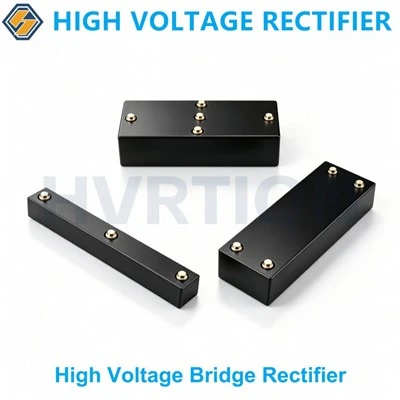
No hoops to jump through, no endless sales calls. If you want to chat through your project, get sample units to test, or just ask a few questions, reach out. I’m here to help, not push a sale.
High Voltage Capacitor Reference
- High-Voltage Diode Applications and Performance Characteristics, IEEE Transactions on Power Electronics, 2022
- Comparison of Solid-State High-Voltage Components for Industrial Power Systems, Journal of Electronic Materials, 2021
- Reliability Analysis of High-Voltage Solid-State Devices, International Conference on High Voltage Engineering, 2020
- Design Considerations for High-Frequency High-Voltage Circuits, IEEE Transactions on Industrial Electronics, 2023
Anshan HVRTION Electronic Technology Co., Ltd.
As one of the most professional hvp high voltage diode manufacturers and suppliers in China, we’re featured by quality products and good price. Please rest assured to buy discount hvp high voltage diode for sale here and get quotation from our factory. We also accept customized orders.
Address: 17 East Jiefang RD., Tiedong District, Anshan, Liaoning, China.
E-mail: hvrtion@hotmail.com
WebSite: https://www.hvrtion.com/
