If you’ve ever stepped into a precision machine shop, you’ve probably stood next to an automatic lathe and felt the ground beneath your feet shift a little—those are the kind of machines that don’t just cut metal, they anchor an entire production line. When customers email me asking, “What’s the weight of an automatic lathe?” I don’t start with a generic number. I start by asking what they’re making, how much space they have, and whether they need a machine that fits in a small retrofit shop or one that runs 24/7 on a factory floor. As an automatic lathe supplier, I’ve spent 12 years talking to machinists, plant managers, and startup owners, and one thing I’ve learned is that weight isn’t just a spec—it’s a problem solver, a space saver, and a whole lot more. Automatic Lathe

Let’s get one thing straight first: there’s no single “right” weight for an automatic lathe. A machine that turns tiny medical screws is not going to weigh the same as one that cuts large, heavy aerospace parts. That’s why I always break it down by the type of automatic lathe, because that’s what really determines the weight. The three most common categories we supply are Swiss-type automatic lathes, cam-style automatic lathes, and CNC automatic lathes—each with their own numbers, reasons for those numbers, and real-world impact on your shop.
Let’s start with Swiss-type automatic lathes, the workhorses of precision machining for small parts. If you’ve ever held a dental implant or a tiny automotive connector, chances are it was made on a Swiss lathe. These machines are designed to hold a small metal rod and feed it through a guide bushing as it cuts, which means their design is compact. A standard 3-axis Swiss-type automatic lathe from our lineup weighs between 1,200 kg (2,645 lbs) and 2,200 kg (4,850 lbs). Wait, you might think that’s light for a machine that can hold such tight tolerances—like ±0.001 mm—but here’s why it works: Swiss lathes don’t have a huge, heavy headstock for large workpieces. Their frame is built for rigidity, sure, but also for maneuverability. A lot of our startup customers love Swiss lathes because they can move one with a forklift into a corner of their existing shop without reinforcing the floor, which is a huge win when you’re just starting out. I had a customer in Chicago last year who turned a 10×10 foot garage into a precision machining shop with a 1,500 kg Swiss lathe—he said it fit through his double doors with 6 inches to spare, no problem. That kind of practical detail is why weight matters so much for Swiss-type models.
Next up, cam-style automatic lathes. These are the old reliables, still used today for high-volume, consistent parts like bolts, bushings, and small hydraulic components. Cam-style lathes use a series of cams and gears to control tool movement, so their design is a bit bulkier than Swiss lathes. A standard 6-station cam automatic lathe weighs between 2,500 kg (5,512 lbs) and 4,000 kg (8,818 lbs). Why so much heavier? The cam system requires a lot of mechanical components to run smoothly, and the frame needs to be heavy to absorb the vibration of multiple tools cutting at the same time. I always tell customers that if you’re running 10,000 parts a day, a cam-style lathe’s extra weight is a good thing—it means you’ll get fewer miscuts and less downtime from vibration. A plant manager in Detroit told me a few years back that switching from a lighter, cheaper cam lathe to our 3,800 kg model cut his part defect rate by 12% in the first month. That’s the kind of result that makes the weight worth it, even if it means hiring a rigging team to get it in the door.
Then there are CNC automatic lathes, the most versatile and powerful category for modern machining. CNC lathes use computer controls to move tools and workpieces, so they can handle everything from tiny precision parts to large, heavy components like engine valves or industrial gears. This is where the weight range gets really wide, and it’s often the first thing customers ask about when they’re scaling their operations. A small, benchtop CNC automatic lathe for prototype work weighs around 800 kg (1,764 lbs)—light enough to move around a lab or small shop. A mid-sized CNC lathe for general machining runs 3,000 kg (6,614 lbs) to 6,000 kg (13,227 lbs). And then there are the heavy-duty CNC automatic lathes for large aerospace or energy parts, which can weigh upwards of 10,000 kg (22,046 lbs). Last year we delivered a 12,000 kg CNC lathe to a company making wind turbine components—they had to pour a 1-foot thick concrete slab in their new shop to support it, but once it was in place, they could run parts they couldn’t even touch on their old machine. The extra weight here is all about rigidity: when you’re cutting a 2-meter long steel shaft, you don’t want the machine to flex even a little, because that means a bad part or a broken tool.
Now, I know what you’re thinking: why does weight matter beyond just fitting through a door or on a floor? Let’s get into the real, practical reasons that come up every day when I’m working with customers. First is vibration. A lighter machine is more likely to vibrate when it’s cutting metal, especially at high speeds. Vibration leads to poor surface finish on parts, shorter tool life, and even damage to the machine itself. A few months ago, I had a customer who bought a cheap, light cam-style lathe for his shop. He called me a week later frustrated because his parts had a rippled finish, and his tools were breaking every other day. We sent a technician out, and he noticed the machine wasn’t anchored properly—turns out the light frame was flexing under the cutting load. We had him adjust the anchoring bolts and balance the machine, and the vibration dropped by 80%. That’s where weight plays a quiet role: a heavier, well-built machine doesn’t vibrate as much, so you get better parts and lower maintenance costs.
Second is floor loading. This is a big one that a lot of first-time buyers overlook. Every commercial and industrial floor has a weight limit per square foot. If you put a 4,000 kg cam-style lathe on a floor that’s only rated for 1,500 kg per square meter, you’re looking at costly repairs or even a safety hazard. For Swiss-type lathes, the smaller footprint and lower weight mean they can often go on standard shop floors, but for heavy CNC lathes, you need to check with your building’s engineer. I always give customers a simple rule of thumb: divide the machine’s total weight by its footprint in square meters, and make sure that number is less than your floor’s load rating. We also offer free floor plan assessments for all our customers—no charge, no obligation—because I’d rather help them get it right the first time than deal with a call when they realize their new machine can’t fit in their space.
Third is stability during operation. Automatic lathes run at high speeds, sometimes with multiple tools cutting at once, so they need to stay locked in place. A machine that’s too light can shift slightly on its base when it’s under load, which leads to inaccurate parts. I remember a startup customer last year who bought a cheap, entry-level CNC lathe to save money. He set it up on a concrete slab in his garage, and within a month, he noticed his shaft lengths were off by 0.5 mm—enough to make them unusable. Turns out the light frame was shifting when the spindle spun at 5,000 RPM. We recommended a heavy-duty CNC lathe in the mid-range, and once it was anchored properly, his part accuracy went back to within ±0.002 mm. That’s the difference a properly weighted machine makes for small operators who need to get every part right to keep their clients happy.
Now, I want to be clear: weight isn’t everything. I’ve seen a 5,000 kg cam-style lathe that was poorly built, with a flimsy frame that flexed under load, and a 2,000 kg Swiss-type lathe that was precision-engineered with rigid cast iron and gave perfect parts every time. So when I talk about weight, I always pair it with the build material—most quality automatic lathes use cast iron for their frame, which is dense and absorbs vibration better than steel. The way the frame is designed, how the spindle is mounted, and the quality of the components all play a bigger role than just raw weight, but weight is a good starting point. It’s a quick way to tell if a machine is built to last, not just to be cheap.
If you’re shopping for an automatic lathe, here’s my advice, based on 12 years of talking to hundreds of machinists and plant managers. First, figure out what kind of parts you’re making. If you’re doing tiny precision parts, a Swiss-type lathe in the 1,200 kg to 2,200 kg range is probably right for you. If you’re running high-volume medium-sized parts, a cam-style lathe between 2,500 kg and 4,000 kg will give you the consistency you need. If you need versatility to make everything from prototypes to large parts, a CNC automatic lathe in the 3,000 kg to 6,000 kg range is a solid middle ground. Second, check your floor. Don’t just assume your shop can handle whatever machine you buy—talk to your building manager or a structural engineer, and use that weight-per-square-meter rule I mentioned. Third, don’t chase the cheapest machine. A lighter, cheaper lathe might save you money upfront, but if it leads to more defects, downtime, and repairs, you’ll spend more in the long run.
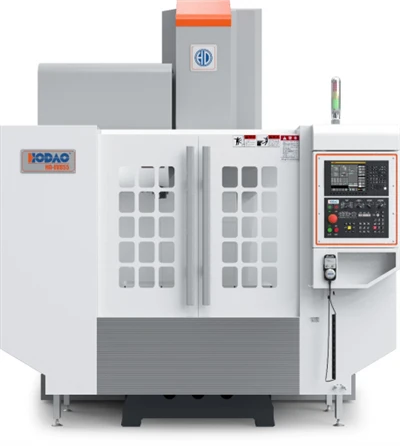
At the end of the day, an automatic lathe is an investment. It’s a machine that will run your parts, make your customers happy, and help your business grow. The weight is just one piece of the puzzle, but it’s an important one—one that can save you hassle, money, and headache down the line. If you’re ready to talk about what kind of automatic lathe is right for your shop, whether you need a small Swiss model or a heavy-duty CNC, reach out to our team. We’ll answer all your questions, give you accurate weight specs, and even help with floor plans and installation guidance. Let’s build something together, one part at a time.
Automatic Lathe References
Modern Machine Shop. (2022). Automatic Lathe Specs & Application Guide. SME Media.
The Fabricator. (2021). Machine Tool Weight and Floor Loading Considerations. Fabricators & Manufacturers Association International.
Swiss-Type Machining Association. (2023). Precision Lathe Design and Performance Standards. Swiss-Type Machining Association.
Taizhou Qiyang Trading Co., Ltd.
As one of the most professional automatic lathe manufacturers and suppliers in China, we’re featured by quality products and good price. Please rest assured to buy bulk automatic lathe for sale here and get quotation from our factory. Customized orders are welcome.
Address: Zhenhai Village, Binhai Town, Wenling City, Taizhou City, Zhejiang Province
E-mail: qycncmachine@outlook.com
WebSite: https://www.qycncmachine.com/
